

- 0 則評論
- 作者:Yuzuki Tsukihana
Japanese rice crackers complete guide: Types, flavors & 10 top picks
- 0 則評論
- 作者:Yuzuki Tsukihana
Japanese rice crackers are one of Japan’s most beloved snacks, enjoyed for centuries and still popular today. At their core, they are made from rice, a staple of Japanese cuisine, then baked or fried into crunchy bites with flavors ranging from savory soy sauce to sweet sugar glaze. Japan With Love is proud to introduce these unique treats to global snack lovers.
>>> Recommended for you
Historically, rice crackers, or senbei, date back to at least the 8th century. They were originally simple rice cakes offered to travelers or at temples, but over time they evolved into a variety of shapes and tastes. From festivals to casual teatime, they remain part of Japan’s culinary culture.

The appeal of Japanese rice crackers lies in their balance: crisp texture, satisfying crunch, and endless flavor options. They are light enough to enjoy between meals, yet flavorful enough to pair with tea, beer, or even as a side with soup. Their versatility and cultural symbolism make them much more than just a snack.
Main types of Japanese rice crackers:
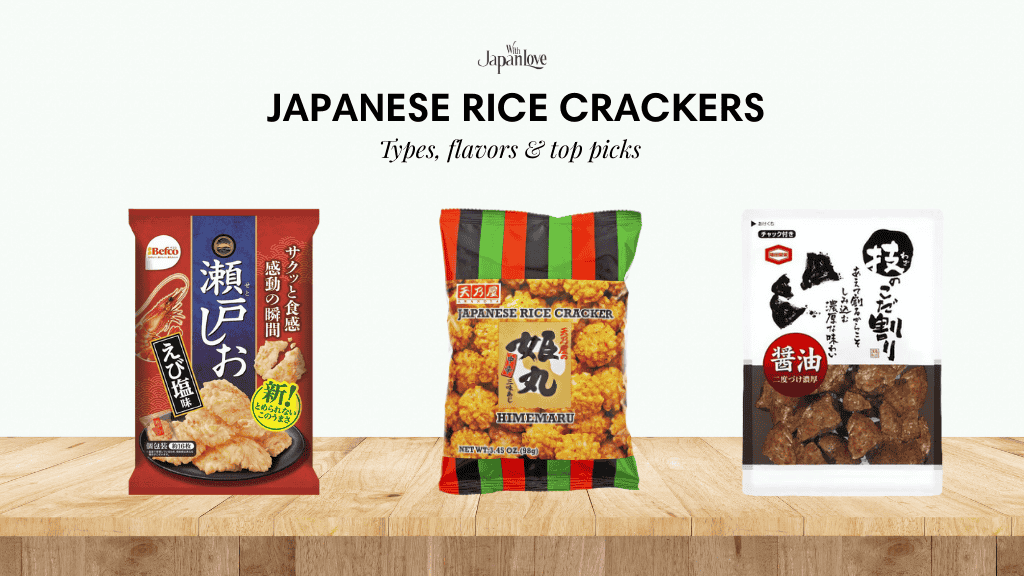
Japan produces countless variations of rice crackers, but a few stand out worldwide for their quality and taste. Below we highlight 10+ of the best Japanese rice crackers you should try. They differ in shape, texture, and flavor, but all share the hallmark of Japanese craftsmanship.
These round, bite-sized crackers are among the most iconic Japanese snacks. Their glossy soy sauce glaze and satisfying crunch make them both visually appealing and irresistible. Perfect for those who love a simple yet deeply flavorful snack.

Shelly senbei are thin, elegant rice crackers with a delicate sugar glaze. They are popular among children and adults who prefer a mild sweetness without overwhelming saltiness. Their subtle taste makes them easy to enjoy anytime of the day.
These crackers highlight Seto Inland Sea salt blended with shrimp essence for a unique umami snack. They offer a perfect balance of seafood aroma and savory seasoning that is both refreshing and satisfying.
Kabukiage are famous for their bold, crunchy texture and robust flavor. The shrimp variation enhances this with an umami-rich depth, making them one of the most flavorful Japanese rice crackers available.
Arare are colorful, bite-sized rice crackers often enjoyed during festivals or New Year celebrations. The Toyosu variety often comes mixed with peanuts and wrapped with seaweed, offering a delightful mix of tastes and textures.
This modern twist combines Japanese tradition with creamy Hokkaido cheese. The richness of dairy balances perfectly with the lightness of the rice cracker, creating a unique savory snack.
Classic soy sauce senbei are the ultimate representation of Japanese rice crackers. Thick and crunchy with a deep umami glaze, they embody traditional flavors that remain timeless.

For spice enthusiasts, this version delivers a fiery experience. Double-dipped for extra flavor, these senbei are bold, crunchy, and guaranteed to awaken your taste buds.
This mix offers variety in one package, combining senbei, arare, and sometimes peanuts or wasabi-flavored crackers. It’s a versatile choice, especially when sharing with friends or family.
Specially designed for infants, these rice crackers are gentle and easy to eat. With low salt content and a melt-in-the-mouth feel, they are both safe and tasty for little ones discovering Japanese snacks.
To keep rice crackers fresh, proper storage is essential. These snacks are prone to losing crispness if exposed to moisture. Always store them in airtight containers or resealable bags. If unopened, keep them in a cool, dry place away from sunlight.
Ingredients like soy sauce, shrimp, or seaweed can influence shelf life. Check the packaging for expiry dates, especially for flavored or mixed varieties. For Japanese rice crackers with seaweed, freshness is key to enjoying their umami taste.
Extra tips:
Japanese rice crackers remain a timeless snack, combining history, culture, and irresistible crunch. From himemaru Japanese rice crackers to Japanese rice crackers mix, they offer something for every taste. Easy to store, relatively light in calories, and endlessly versatile, they continue to win hearts worldwide. At Japan With Love, we celebrate this tradition by bringing you the best Japanese rice crackers and other authentic treats. Explore our store today, taste the flavors of Japan, and find your new favorite snack.
Japanese rice crackers are diverse, and many readers have common questions. Here are concise answers to help you explore further.
Yes, many rice crackers are relatively healthy since they are low in fat and calories compared to chips. A standard serving of Japanese rice crackers calories is around 110–150 per 30g. However, flavored or fried varieties may contain more salt and oil, so enjoy them in moderation.
To prepare a simple Japanese rice crackers recipe, cook rice until firm, press it flat, cut into shapes, and bake until crisp. Flavor with soy sauce, salt, or sugar. Some recipes use glutinous rice for chewy texture. Making them at home allows customization of taste and healthiness.
Not always. Although rice is gluten-free, many crackers use soy sauce, which often contains wheat. For gluten-free options, look for special labels or varieties flavored with tamari soy sauce. Always check the ingredient list carefully before purchasing.
Mochi is a soft, chewy rice cake made from glutinous rice, while senbei are crunchy rice crackers baked or grilled. Both come from rice but differ in texture and preparation. Mochi is often eaten fresh, while senbei are preserved as snacks.
Rice crackers pair well with green tea, beer, or sake. They can also be enjoyed with soups, salads, or even cheese. Sweet versions are nice with coffee or dessert. Their versatility makes them an easy companion to many meals and drinks.

Yuzuki Tsukihana
Yuzuki Tsukihana is a Japanese beauty writer and researcher with over 8 years of experience in the skincare and cosmetics industry. She holds a Master of Science in Cosmetic Science from the University of Cincinnati (USA), where she specialized in skincare formulation, ingredient efficacy, and product safety.


分享:
15+ Japanese heat protectant best picks to protect, smooth & shine your hair
How to do Japanese hair straightening at home (Updated full guide)