Japanese hair mask treatments are more than just beauty trends, they’re deeply rooted in Japan’s commitment to quality, simplicity, and long-term hair health. For those struggling with dryness, frizz, heat damage, or chemically treated hair, Japanese hair masks offer a powerful yet gentle solution that consistently delivers visible results.
At Japan With Love, we specialize in curating the best Japanese beauty products for customers worldwide. Whether you're looking to restore shine, improve manageability, or simply nourish your strands, the best Japanese hair mask can help you achieve salon-like results right at home.
1. What makes Japanese hair masks gain popularity in recent times?
Japanese hair masks are gaining attention worldwide thanks to their highly effective formulas, natural ingredient base, and gentle care philosophy. Unlike many Western masks that focus on surface-level smoothing, Japanese hair masks penetrate deeper to nourish the hair shaft and restore moisture balance over time.
These masks often feature iconic Japanese ingredients such as:
Camellia oil (Tsubaki oil): Packed with antioxidants and essential fatty acids to restore shine.
Rice bran extract: Known for strengthening hair and boosting elasticity.
Amino acids & keratin: Rebuild broken protein chains in damaged strands.
Hinoki (Japanese cypress): Naturally calming and antimicrobial, ideal for scalp health.
Why are they so effective?
Formulas are lightweight yet deeply hydrating, perfect for daily use or weekly treatments.
Many are silicone-free, sulfate-free, and color-safe, making them gentle enough for sensitive scalps and dyed hair.
Their minimalist scent and texture are highly appealing to those who dislike overpowering fragrances.
Whether you’re dealing with color-treated dryness, heat styling damage, or split ends, a Japanese hair mask can quickly bring life and strength back to your hair.
2. Top 10+ best Japanese hair masks for nourishing, healthy hair
If you’re looking for the best Japanese hair mask to restore your locks, the list below includes trusted formulas that cater to dry, damaged, color-treated, and frizz-prone hair types. Each product is handpicked based on real customer reviews, ingredient quality, and performance.
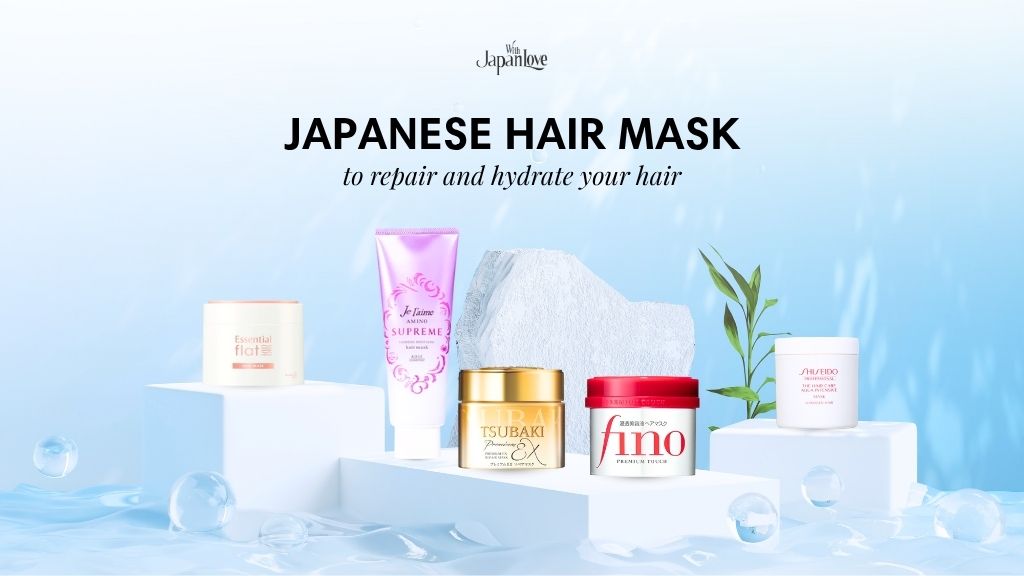
2.1. Tsubaki Premium EX Repair Hair Mask
A long-time bestseller in Japan, the Tsubaki Premium EX Repair Hair Mask by Shiseido delivers salon-quality results in just one use. Enriched with camellia oil (Tsubaki), royal jelly, and soy protein, this mask works to restore shine, deeply hydrate, and repair split ends from the inside out. Unlike thick masks that weigh your hair down, Tsubaki offers a lightweight formula that rinses off cleanly while leaving your hair smooth and silky. Many users praise this viral Japanese hair mask for making their hair feel “as soft as after a salon treatment,” especially after bleaching or heat styling. With a fast-penetrating technology, it conditions deeply in just 30 seconds, ideal for busy routines.
Texture: Rich, creamy texture that rinses off easily and works well with low‑porosity hair
Key ingredients: Camellia oil, royal jelly, soy protein
Best for: Dry, frizzy, and color-damaged hair
Recommended using frequency: 1–2 times/week
Effect: Restores shine, smooths cuticle, repairs damage and split ends
This hair mask is a favorite for those who struggle with volume-less hair that becomes flat and frizzy. Kao essential flat hair mask uses moisture-balancing technology to tame unwanted puffiness while keeping strands airy and weightless. Unlike many smoothing masks, it doesn’t make hair greasy or limp. Ideal for fine to medium hair, the formula contains flexible polymers and hydrolyzed silk that smooth each strand’s surface. It’s the best Japanese hair mask if you're looking to enhance manageability without losing natural bounce.
2.3. NatureLab Tokyo Kiseki Molecular Repair Leave-In Hair Masque
Combining cutting-edge technology and clean beauty, this leave-in Japanese hair mask delivers powerful repair without rinse-out hassle. Infused with Apple Stem Cells and Smart Keratin™, this mask strengthens strands and smooths rough cuticles while shielding hair from future damage. It’s a standout for those with chemically processed hair or chronic dryness. As a leave-in treatment, it also doubles as a heat protectant and styling primer, saving time and effort.
Texture: Lightweight, leave-in lotion
Key ingredients: Smart Keratin™, apple stem cells, argan oil
Best for: Damaged, bleached, or heat-styled hair
Recommended using frequency: After each wash
Effect: Deeply hydrates, smooths cuticles, and fortifies brittle strands
Price: $30–42
2.4. FINO Premium Touch Hair Mask
FINO by Shiseido is a cult-favorite in Japan and often called the best Japanese hair mask for dry, brittle hair. Packed with six types of nourishing ingredients like royal jelly, squalane, and PCA, it deeply hydrates and smooths damaged hair cuticles. The texture is ultra-creamy and luxurious, making it perfect for a weekly deep-conditioning session. Hair becomes noticeably shinier and stronger after just a few uses. To know how to use Fino hair mask for best result, you can check out our previous blog.
Texture: Thick, creamy, intensive
Key ingredients: Royal jelly, squalane, PCA, lipidure
Best for: Dry, coarse, color-treated hair
Recommended using frequency: 1–2 times/week
Effect: Deeply hydrates, smooths cuticles, and fortifies brittle strands
2.5. NatureLab Tokyo Perfect Volume Thickening & Conditioning Hair Masque
This volumizing hair mask focuses on rebuilding structure in thinning, flat, or aging hair. Its botanical proteins and apple stem cells revitalize hair follicles while bamboo and rice extract add light hydration and strength. It’s ideal for users wanting both volume and repair, a rare combo in the haircare world. The scent is also a crowd-pleaser: fresh, clean, and gender-neutral.
Texture: Lightweight gel-cream
Key ingredients: Bamboo extract, rice protein, apple stem cells
Best for: Flat, thin, aging, or brittle hair
Recommended using frequency: 1–2 times/week
Effect: Adds fullness, strengthens strands, and leaves hair bouncy
Price: ~$28–32
2.6. Hinoki Hair Mask
The Hinoki Hair Mask blends traditional Japanese herbal care with modern hydration technology. Hinoki (Japanese cypress) extract has been used for centuries in Japan for its natural antimicrobial and soothing properties. This mask targets both scalp health and hair restoration, making it an excellent option for users with dandruff, sensitivity, or itchy scalp issues. It also contains shea butter and rice protein to lock in moisture without causing buildup. If you’re searching for a Japanese hair mask that cares for both hair and scalp, this one’s for you.
Best for: Sensitive scalp, dry or itchy scalp, dry mid-lengths
Recommended using frequency: Once a week or as needed
Effect: Soothes scalp while deeply moisturizing and softening hair
Price: ~$18–22
2.7. Shiseido Professional The Hair Care Aqua Intensive Oil Unlimited Mask
From Shiseido’s professional line, this mask is designed for severely damaged or chemically treated hair. The Aqua Intensive Oil Unlimited Mask replenishes lost moisture while strengthening strands from root to tip. It’s enriched with dual oil technology to improve elasticity without greasiness. Used in salons across Japan, it delivers results that are comparable to deep-conditioning treatments, at a fraction of the price over time.
A luxurious formula infused with mineral-rich clay, the Kose Predia Fango Hair Mask detoxifies and hydrates at the same time. It’s ideal for those dealing with scalp buildup, oiliness, or flat, dull hair. Seaweed extract and fango clay help absorb excess oil and refresh the scalp, while marine collagen adds softness and body. It offers a unique cooling sensation, making it a favorite during warmer months or post-gym refresh routines.
Effect: Detoxifies scalp, adds body and bounce, refreshes roots
Price: ~$28–34
2.9. Omakazi Beauty Repair Remedy Rice Water & Babassu Deep Conditioning Mask
Inspired by traditional Japanese beauty rituals, this deep-conditioning Japanese hair mask harnesses the power of rice water, babassu oil, and amino acids to heal dry, brittle strands. Rice water has been used for centuries to promote shine, strength, and smoothness. This mask is a great all-rounder, suitable for all hair types but especially helpful for natural, curly, or coarse textures needing moisture retention.
Effect: Deeply conditions, enhances curl definition, and boosts shine
Price: ~$28–34
2.10. Je l'aime Amino Supreme Hair Mask
The Je l’aime Amino Supreme Hair Mask is rich in 18 types of amino acids, making it perfect for rebuilding damaged hair structure while maintaining lightness and shine. Free from sulfates and parabens, it suits even color-treated or delicate hair. This mask has a silky-smooth texture and a luxurious floral scent. It’s ideal for those looking for a more premium-feel hair mask that still delivers essential hydration.
Texture: Silky and lightweight cream
Key ingredients: 18 types of amino acids, squalane, macadamia oil
Best for: Color-treated, thin, or weak hair
Recommended using frequency: 2–3 times/week
Effect: Strengthens delicate strands, boosts resilience, and enhances softness
3. How to use the viral Japanese hair mask properly for the best result?
Knowing how to apply a Japanese hair mask correctly can make all the difference. Whether it’s a rinse-out treatment or a leave-in formula, following these steps ensures your hair reaps the full benefits of hydration and repair.
Step-by-step guide to using a Japanese hair mask:
Wash your hair with a gentle Japanese shampoo to remove oil and product buildup.
Gently towel-dry your hair until it’s damp (not dripping wet).
Scoop a moderate amount of the hair mask and spread it evenly from mid-length to ends. Avoid applying directly to the scalp unless the product is scalp-friendly (e.g., Hinoki or Predia Fango).
Massage through strands to ensure full coverage. Use a wide-tooth comb for even distribution.
Leave it on for 5–10 minutes (or follow the label instructions). For deeper repair, wrap your hair in a warm towel.
Rinse thoroughly with lukewarm water until the hair feels clean and residue-free.
Finish with a cold rinse to seal the cuticle and enhance shine (optional).
For leave-in masks like NatureLab Tokyo Kiseki, skip rinsing, just apply to damp hair and style as usual.
4. Choose the right Japanese hair mask: what to look for, and what to avoid
When choosing a Japanese hair mask, focus on ingredients that truly support your hair’s needs and avoid additives that may harm it
Avoid: Sulfates, formaldehyde-releasing agents, synthetic fragrances, mineral oil; these can strip moisture, irritate, or build up
>>> Check out ou Fino premium touch hair oil review to explore its pros and cons and see how this popular Japanese hair mask can address your specific hair concerns.
Flat, fine, low-porosity hair
Choose: Lightweight botanicals like aloe vera and glycerin, rice protein, apple stem cells, lightweight oils such as argan or macadamia, hydrate gently without weighing down strands
Avoid: Heavy silicones (e.g. dimethicone), petrolatum, mineral oil, thick waxes, these create buildup and block moisture entry
Avoid: Sulfates, high alcohols, formaldehyde-releasing preservatives, these degrade color and weaken fine strands
From deep hydration to long-term repair, the best Japanese hair mask delivers powerful results without harsh chemicals or heavy residue. Whether you’re new to J-beauty or a longtime fan, there’s a formula designed to solve your unique hair challenge. Restore your shine, repair the damage, and unlock your healthiest hair yet, with help from Japan With Love.
FAQs – People also ask about Japanese hair masks
If you’ve been wondering whether these masks are truly worth the hype or how to use them in your routine, here are the answers to your most common questions:
Does Tsubaki hair mask actually work?
Does Tsubaki hair mask actually work?▾
Yes, the Tsubaki hair mask is highly praised for its instant smoothing effect. It uses camellia oil and royal jelly to nourish hair strands, reduce dryness, and leave your hair noticeably softer and shinier after just one use, especially helpful for damaged, frizzy, or color-treated hair types. To get the best result ofTsubaki hair mask instructions it properly is the key, check out our blog to learn more.
What is the viral Japanese hair mask called?
What is the viral Japanese hair mask called?▾
The viral Japanese hair mask often refers to the Tsubaki Premium EX Repair Hair Mask. It gained popularity due to its fast-acting formula that delivers salon-like results in under a minute, helping users achieve silky, manageable hair without heavy residue or long wait times.
How many times a week should I use Tsubaki hair mask?
How many times a week should I use Tsubaki hair mask?▾
For most people, using the Tsubaki hair mask once or twice a week is enough to maintain hydration and softness. However, if your hair is especially damaged or dry, you may benefit from using it up to three times per week for enhanced results.
Is Tsubaki for damaged hair?
Is Tsubaki for damaged hair?▾
Yes. The Tsubaki mask is specifically designed for dry and damaged hair. It contains rich conditioning agents like camellia oil and soy protein that work together to repair split ends, replenish lost moisture, and protect hair from daily stress and environmental factors.
Do you put conditioner after a hair mask?
Do you put conditioner after a hair mask?▾
No, it’s generally not necessary to use conditioner after a hair mask. Hair masks are more concentrated than conditioners and already provide deep moisture and nourishment. Using both in one wash may overwhelm the hair, especially if it’s fine or prone to oiliness.
What is the correct order to apply hair products?
What is the correct order to apply hair products?▾
The correct haircare order is: shampoo first to cleanse, followed by a hair mask or conditioner. After rinsing, apply leave-in treatments or serums if needed, then finish with styling products. This sequence ensures proper absorption and long-term hair health and manageability.
Do you do a hair mask before or after shampooing?
Do you do a hair mask before or after shampooing?▾
Always apply a hair mask after shampooing. Shampoo opens up the hair cuticle and removes impurities, allowing the nutrients from the hair mask to penetrate deeply into the strand. Applying a mask before washing would reduce its effectiveness and leave residue behind.
Do you apply the Tsubaki hair mask on roots?
Do you apply the Tsubaki hair mask on roots?▾
It’s best to avoid applying the Tsubaki mask directly to the roots unless your scalp is very dry. Focus on the mid-lengths and ends, where damage and dryness tend to be most severe. Applying only to the lower section ensures nourishment without making your scalp greasy.
What Japanese hair mask is good for low porosity hair?
What Japanese hair mask is good for low porosity hair?▾
Low porosity hair struggles to absorb moisture, so lighter masks are ideal. The Je l’aime Amino Supreme Hair Mask and NatureLab Tokyo Kiseki Leave-In are excellent options, offering hydration without heavy oils or silicone buildup. These formulas penetrate gently without overwhelming low-porosity hair.
How often should low porosity hair use a hair mask?
How often should low porosity hair use a hair mask?▾
Low porosity hair should be masked about once every 7 to 10 days. Using a lightweight formula consistently helps maintain hydration without protein overload or product buildup. Avoid overly rich or heavy treatments that can sit on the surface and lead to dull, lifeless strands.
Yuzuki Tsukihana
Yuzuki Tsukihana is a Japanese beauty writer and researcher with over 8 years of experience in the skincare and cosmetics industry. She holds a Master of Science in Cosmetic Science from the University of Cincinnati (USA), where she specialized in skincare formulation, ingredient efficacy, and product safety.







Share:
20+ Japanese women’s hairstyles with timeless beauty and elegance
20+ Japanese women’s hairstyles with timeless beauty and elegance