

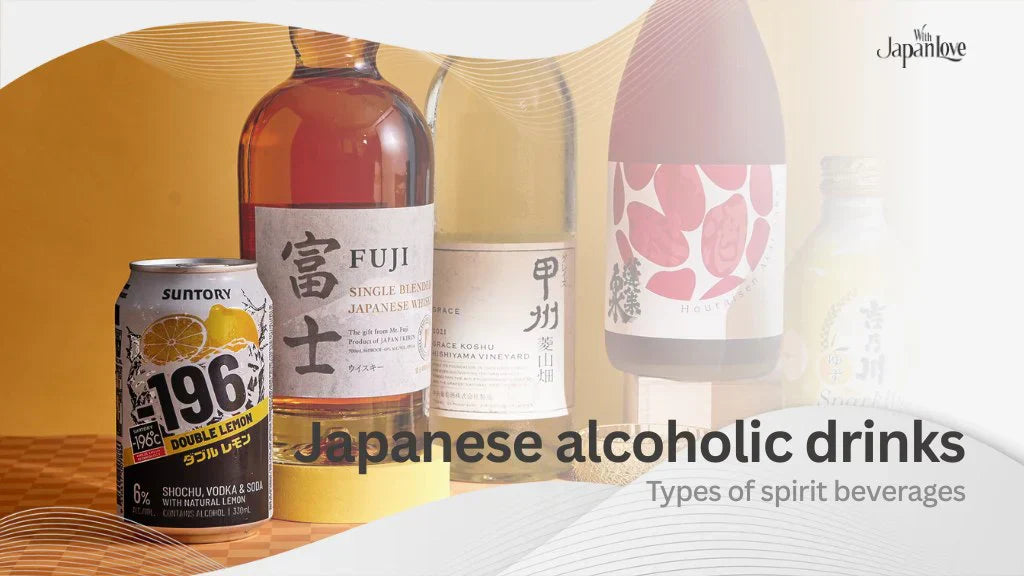
- 0 コメント
- by Minase Suiren
6 Types of Japanese alcoholic drinks, spirit beverages
- 0 コメント
- by Minase Suiren
Japanese alcoholic drinks offer a fascinating journey into Japan’s rich culture and culinary traditions. Whether you’re a seasoned connoisseur or just beginning to explore, understanding these drinks can elevate your tasting experience.
Discover the best ways to enjoy Japanese alcoholic drinks, learn about their flavor profiles, and explore pairing tips. Read on at Japan With Love to dive deeper into the world of Japan’s finest spirits and liquors.
Below we’ll explore six major types of Japanese liquor drinks: their origins, flavour profiles, and what makes them unique. If you are interested in exploring authentic Japanese food and beverage selections, these drinks represent some of the most iconic options available today.
Sake has a history of over 2,000 years in Japan, originating from rice cultivation and early fermentation techniques introduced from Asia. Early production methods were simple, but over time, especially during the Nara and Heian periods, sake evolved into a refined beverage, closely linked with Japanese culture, ceremonies, and imperial traditions.
Sake is made from polished rice, water, yeast, and kōji mold, which converts starch into sugar for fermentation. Its flavor ranges from light, delicate, and subtly fruity or floral to rich, full-bodied, and umami-packed. Serving temperature affects the taste: chilled sake tends to be crisp and fruity, while warmed sake becomes rounder and more robust.
Shochu is a distilled spirit that appeared roughly 400–500 years ago, primarily in southern regions like Kyushu. It developed from sake brewing techniques but uses distillation, allowing higher alcohol content and a wider variety of base ingredients such as sweet potatoes, barley, rice, or sugarcane. Over time, regional variations emerged with unique flavors and methods.

Add Shuzo Machida Sato No Akebono to cart
Shochu typically has a higher alcohol content than sake, around 20–40%. Its flavor depends on the base ingredient: sweet potato shochu is earthy and rich; rice shochu is smooth and mild; barley shochu is gentle with grainy notes. This diversity makes shochu versatile and appealing to different palates.
Umeshu is a sweet plum-infused Japanese liqueur made by soaking unripe ume plums in alcohol and sugar. The tradition became popular during the Edo period when sugar was widely available. It has remained a beloved drink for its sweet, fruity character and approachable flavor.
Umeshu is characterized by a sweet-sour plum aroma and syrupy, smooth texture. Its alcohol content is generally lower than distilled spirits, typically around 10–15%. Umeshu can be enjoyed chilled, on ice, or mixed with soda or warm water, making it versatile for different occasions.
Japanese whisky began in the early 20th century, inspired by Scottish whisky traditions. The first commercial distillery, Yamazaki, was established in 1923. Japanese whisky makers adapted Scottish techniques but developed a unique style, influenced by Japan’s local water, climate, and maturation methods. Today, Japanese whisky is celebrated worldwide for its craftsmanship and quality.

Buy Mars Maltage Cosmo Japanese Blended Whiskey
Japanese whisky is known for its refined, elegant flavors, often featuring floral, fruity, honeyed notes, and sometimes subtle smoke. It can range from light and delicate to rich and complex, depending on the aging and blending process. Whisky is typically enjoyed neat, on the rocks, or in cocktails like highballs.
Beer was introduced to Japan during the Meiji era in the late 19th century. The first commercial brewery was established in Yokohama in 1869. Beer quickly became popular, and large breweries emerged, producing light, crisp lagers that match the Japanese palate. In recent years, craft beer has also grown in popularity. If you want to explore recommendations and styles in more detail, check out this guide to top Japanese beer.

Shop Suntory All Free Zero Calorie Non Alcoholic Beer today
Japanese beer is typically light, crisp, and refreshing, with a clean taste designed to complement meals. Lager styles dominate, but craft beers offer more variety, including fruity or slightly bitter options. Japanese beer is often enjoyed socially, at meals, and in casual gatherings.
Chu-hi, short for “shochu highball,” is a modern Japanese alcoholic drink that became popular in the post-war era. It usually combines shochu or a neutral spirit with soda water and flavored syrups. Commercial canned versions appeared in the 1980s, making it widely accessible and convenient. For a broader look at trendy and traditional Japanese drinks, Chu-hi is often considered one of the most approachable options.
Chu‑hi is light, fizzy, and often fruity, with flavors like lemon, grapefruit, peach, or lychee. Its alcohol content is lower than other spirits, generally 3–10% ABV, making it easy to drink. It’s versatile, refreshing, and perfect for casual, social settings or trying a variety of flavors.
Experiencing Japanese alcoholic drinks is not just about taste—it’s also about embracing the culture and customs that surround them. Here’s how you can enjoy these beverages like a local, whether in Japan or from abroad.
Before diving into specific tips, it’s important to understand that enjoying Japanese alcoholic drinks isn’t just about sipping, it’s also about appreciating the customs, traditions, and ways locals interact with these beverages.

Pairing Japanese alcoholic drinks with food can enhance both the drink and the meal:

Thanks to global demand, many Japanese alcoholic drinks are available internationally. Specialty liquor stores, online retailers, and importers often stock sake, shochu, Japanese whisky, umeshu, beer, and Chu‑hi.
At Japan With Love, we help customers worldwide discover authentic Japanese spirits. You can find curated selections, expert guidance, and tips for safe shipping and storage. When purchasing abroad, check your country’s import regulations, verify authentic labeling, and choose trusted retailers to ensure quality and authenticity.
Japanese alcoholic drinks offer a unique blend of history, craftsmanship, and flavor that appeals to both casual drinkers and connoisseurs alike. From the refined elegance of sake and Japanese whisky to the sweet allure of umeshu and the refreshing fizz of Chu‑hi, each beverage provides a distinct taste of Japan’s culture and traditions. Exploring these drinks allows you to experience not just the flavors, but the stories and artistry behind them.
Before answering common questions, it’s helpful to recap that Japanese alcoholic drinks range from delicate sake and fruity umeshu to stronger spirits like shochu and Japanese whisky, each with unique flavors and cultural significance.
The signature Japanese alcoholic drink is sake (nihonshu). It is deeply rooted in Japanese culture and tradition and is often considered the quintessential Japanese beverage.
Traditional Japanese alcohol includes sake and shochu. Sake is brewed from rice, while shochu is a distilled spirit, both forming the core of Japan’s traditional liquor culture.
Chu‑hi typically contains 3–7% ABV (alcohol by volume), making it lighter and easier to enjoy compared to stronger spirits.
Beer is the most popular alcoholic drink in Japan, widely enjoyed in casual and social settings.

Minase Suiren
Minase Suiren is a seasoned cultural writer and lifestyle curator focusing on Japanese beauty rituals and everyday aesthetics. She holds a master’s degree in intercultural communication from Waseda University with a research focus on beauty norms and gender identity in modern Japanese media.


Share:
22+ Most popular Japanese drinks, beverages define unique taste
7+ Japanese drinks non-alcoholic taste amazing for party nights